
ChatGPT
ChatGPT is an advanced AI-powered conversational and content generation platform built on large language models. It enables text generation, coding assistance, data analysis, and multimodal workflows within a single interface. It serves a wide range of users from content creators to software develop
About
What is ChatGPT?
ChatGPT is a large language model-based AI assistant built on transformer architecture. It generates human-like text responses using autoregressive token prediction. It is widely used for content generation, coding assistance, knowledge processing, and conversational AI applications.
What Problem Does It Solve?
- Reduces content production time
- Automates repetitive writing tasks
- Assists with debugging and code explanation
- Summarizes large documents
- Enables AI-driven customer support
- Enhances multilingual communication
How It Works (Technical Overview)
ChatGPT is based on transformer neural networks with multi-head self-attention layers. It predicts the next token in a sequence based on probability distributions learned during large-scale pre-training.
Technical assumptions include:
- Autoregressive generation
- Token-based processing
- Reinforcement learning from human feedback
- Context window limitations depending on model variant
Enterprise deployments likely rely on optimized inference clusters.
Who Is It For?
- Developers
- Content creators
- SEO professionals
- Product teams
- Researchers
- Customer support teams
- Enterprises building AI workflows
Advantages
- High-quality natural language generation
- Code generation support
- API access
- Scalable infrastructure
- Structured output capability
- Customizable system instructions
Disadvantages
- Occasional hallucinations
- Not inherently real-time internet-aware
- Token-based pricing can scale quickly
- Requires prompt engineering for optimal results
Difference From Competitors
- Strong ecosystem
- Mature API
- Enterprise-ready deployment
- Fine-tuning and custom GPT configurations
- Large developer community
Real-World Use Cases
- SEO blog writing
- AI chatbot backend
- Technical documentation generation
- Code refactoring
- Email automation
- Data structuring
Performance & Scalability
Built on cloud infrastructure capable of handling high concurrency. Token-based billing enables flexible scaling from startup usage to enterprise-level deployments.
Data Security Approach
- Encrypted API communication
- API key authentication
- Enterprise-level data handling options
- Adjustable data retention policies
API & Integration Options
- REST API
- Official SDKs
- Webhooks
- Third-party integrations
- CRM integration
Pricing Logic
- Token-based billing
- Model-dependent pricing
- Enterprise contracts available
Learning Curve
Basic usage is intuitive. Advanced usage requires understanding prompt engineering, temperature control, structured outputs, and context management.
Professional Tips
- Use system prompts strategically
- Optimize temperature settings
- Use structured JSON outputs
- Break large tasks into smaller prompts
- Use function calling for automation
Micro Details
- Streaming responses supported
- JSON mode available
- Code blocks auto-formatted
- Regenerate button for alternative responses
- Context length varies per model
- Latency depends on model size
🎬 Demo Video
✨ Features
- Natural language processing
- Text generation
- Code writing and debugging
- Data analysis support
- Multimodal capabilities
- API integration
🎯 Use Cases
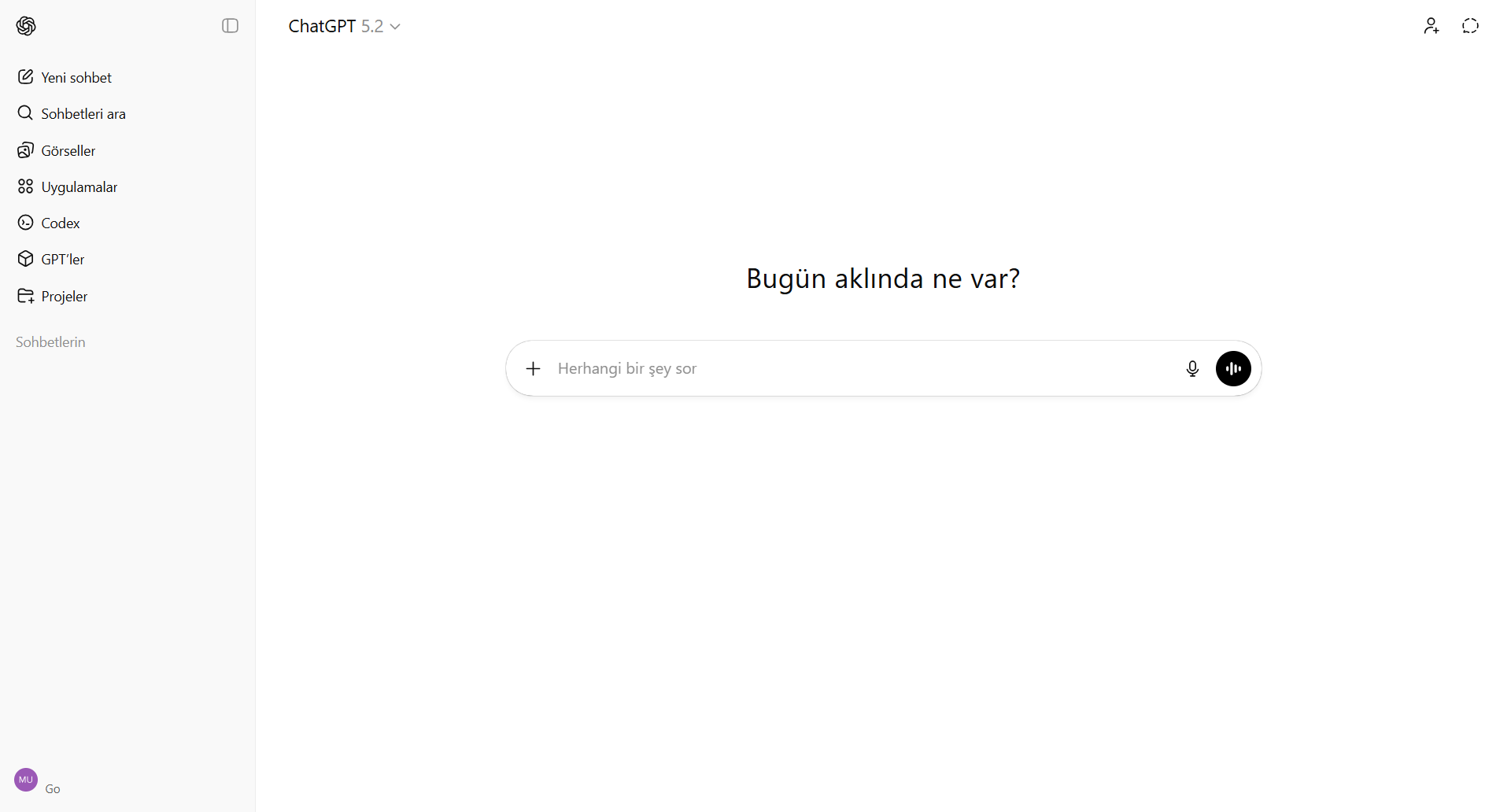
📸 Screenshots
Reviews
1 Review

ilk inceleme
ilk deneyim